Sound in the mid-1800s was depressing. You had great music by composers such as Mendelssohn and Debussy and great orchestras to play them, but no way to save the sound. Once the moment past, the ephemeral noise was gone forever.

In 1878, Thomas Alva Edison changed the world of sound by creating the first device to record sound and play it back - the phonograph. For the first time in history, sound could be captured and kept for the future.

Edison developed the phonograph while working on the telegraph and telephone. The device worked as a voice's vibrations caused a needle to indent a pattern. He first had the machine engraving on a tinfoil-covered cylinder. Later, the design utilized a more durable wax material. This design, shown above, still had the music on the outside of a cylinder, a arrangement foreign to us.
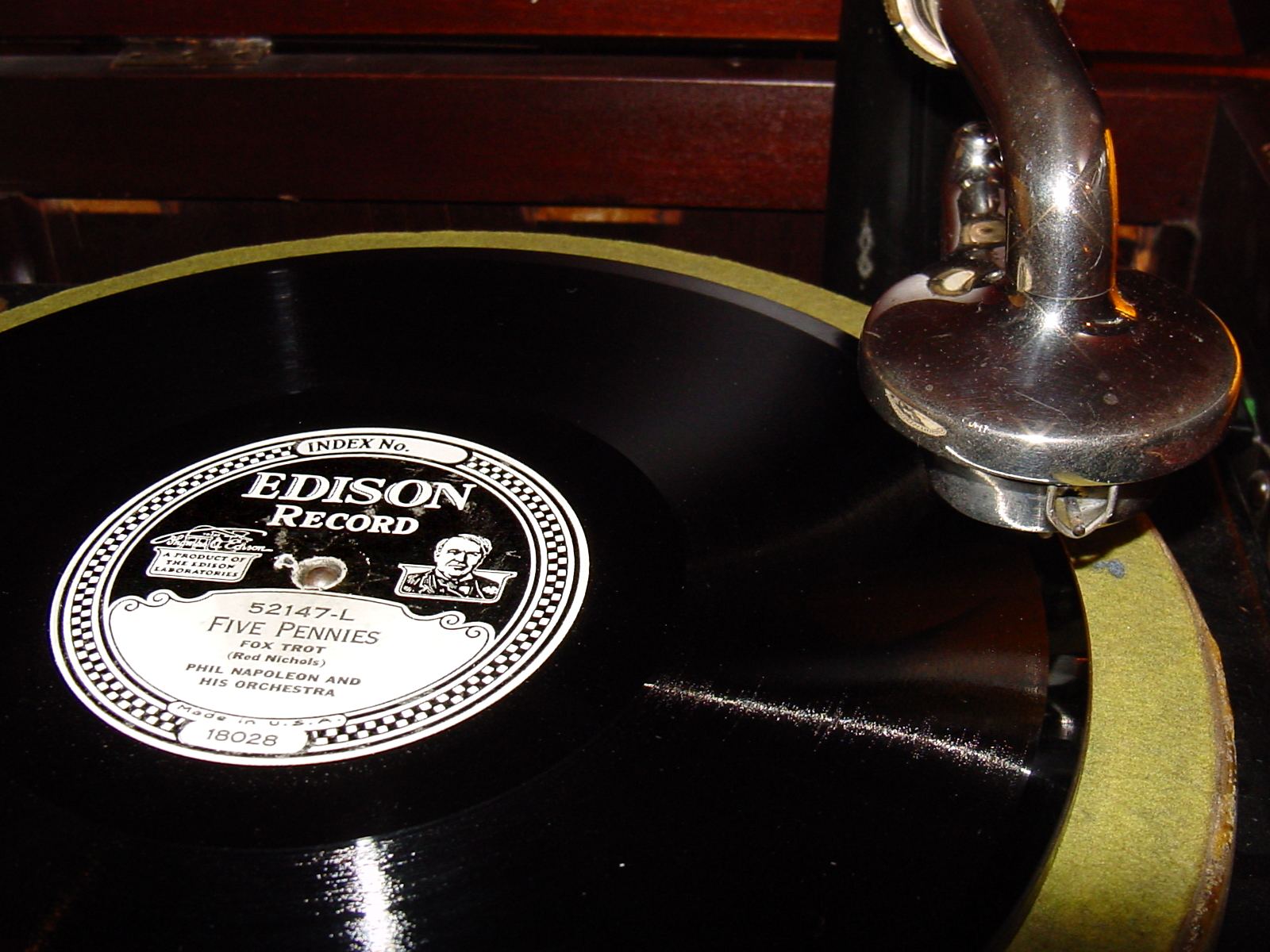
The well-known record disc came about in the early 1900s, when competitors created larger capacity discs rivaling Edison's cylinders. Despite his stubbornness, Edison finally conceded and began his own production of the disc phonographs.
Works Cited:
"History of the Cylinder Phonograph." The Library of Congress. N.p., n.d. Web. 09 Feb. 2016.
Staff, History.com. "Thomas Alva Edison Patents the Phonograph." History.com. A&E Television Networks, 2009. Web. 09 Feb. 2016.

No comments:
Post a Comment