Monday, February 8, 2016

All-time record

Sound in the mid-1800s was depressing. You had great music by composers such as Mendelssohn and Debussy and great orchestras to play them, but no way to save the sound. Once the moment past, the ephemeral noise was gone forever.

In 1878, Thomas Alva Edison changed the world of sound by creating the first device to record sound and play it back - the phonograph. For the first time in history, sound could be captured and kept for the future. 


Edison developed the phonograph while working on the telegraph and telephone. The device worked as a voice's vibrations caused a needle to indent a pattern. He first had the machine engraving on a tinfoil-covered cylinder. Later, the design utilized a more durable wax material. This design, shown above, still had the music on the outside of a cylinder, a arrangement foreign to us.
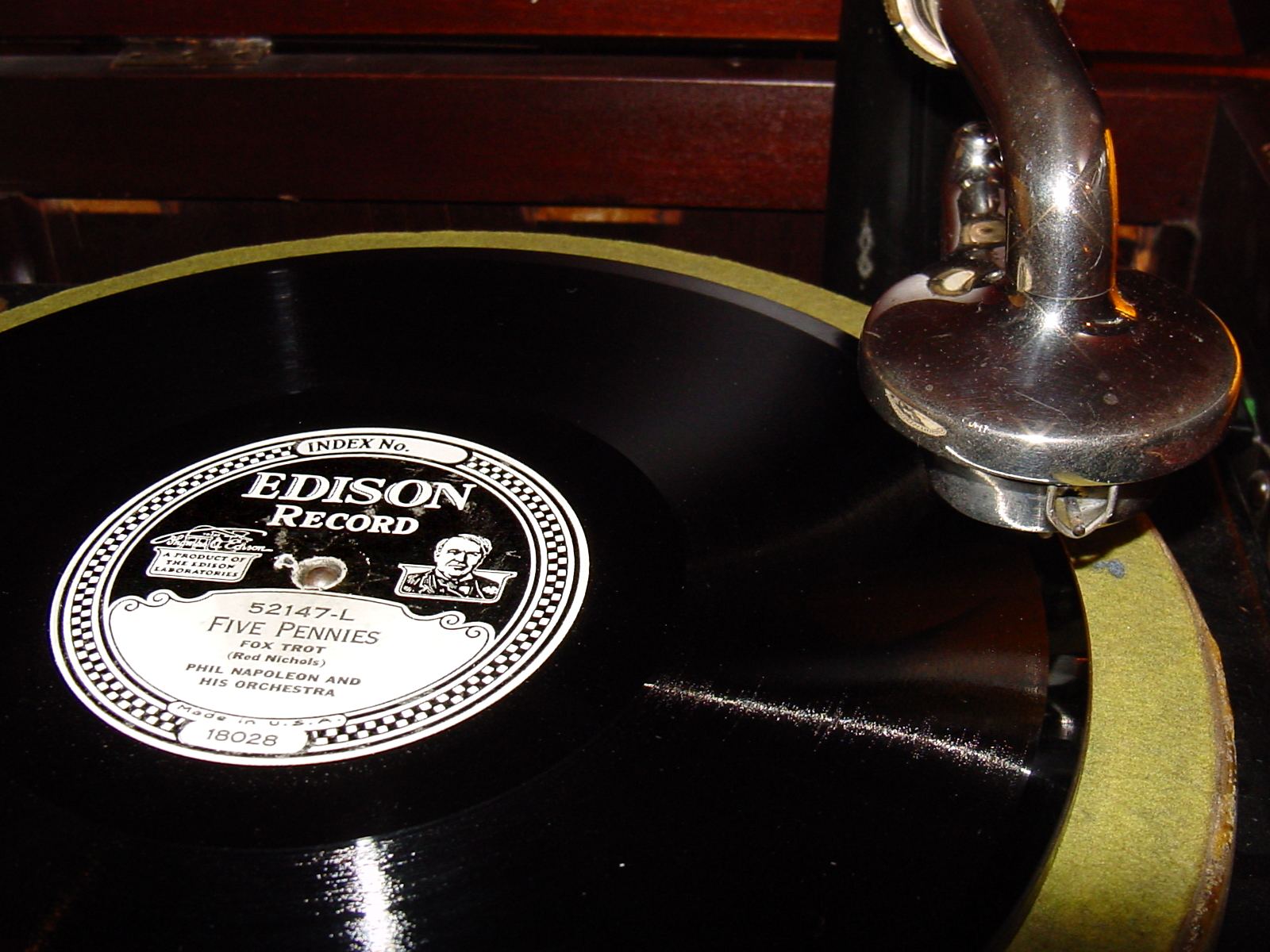

The well-known record disc came about in the early 1900s, when competitors created larger capacity discs rivaling Edison's cylinders. Despite his stubbornness, Edison finally conceded and began his own production of the disc phonographs.

Works Cited:
"History of the Cylinder Phonograph." The Library of Congress. N.p., n.d. Web. 09 Feb. 2016.
Staff, History.com. "Thomas Alva Edison Patents the Phonograph." History.com. A&E Television Networks, 2009. Web. 09 Feb. 2016.

Sound as a weapon?!

Loud noises hurt. I experienced this fact firsthand a couple mornings ago when my band director accidentally blasted Chameleon performed by Maynard Ferguson (https://www.youtube.com/watch?v=3Ipns0jneLY) on the band hall speakers. Beyond 120 decibels, humans start to experience discomfort and hearing loss starts at 130 decibels. 


This LRAD (Long Range Acoustic Device) is capable of delivering sound as loud as 155 dB, well beyond safe levels. It has been used to disperse protesters in Pittsburgh during the G-20 Summit in 2009 as well as the Ferguson, Missouri protesters.


The manufacturers of this weapon label it as "non-lethal", but its potential to literally blow out your eardrums, interfere with balance, and cause permanent damage must be regulated. Right now, no clear standards are in play for this acoustic arsenal, which is also entirely subject to the operator, for whom proper training is necessary.


Works Cited:
Baldwin, Roberto. "What Is the LRAD Sound Cannon?" Gizmodo. N.p., 08 Aug. 2014. Web. 09 Feb. 2016.
Pasternack, Alex. "The New Sound of Crowd Control." Motherboard. N.p., 17 Dec. 2014. Web. 09 Feb. 2016.

Radio (Unbroken link)

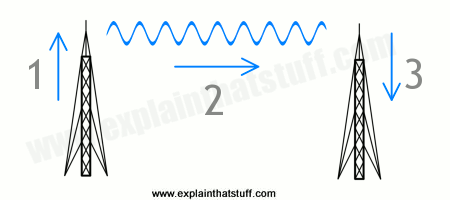
Our class has just finished Unbroken by Laura Hillenbrand. What a book! The author's thorough and vast research, as well as Louis Zamperini's extraordinary life, allowed her biographical novel to read as a fiction novel. A noteworthy scene in the narration involves a radio broadcast, Postman Calls, that alerts Louis' family to his survival. Today I will synthesize technology with my ISP topic and explore how the magic box of a radio transmits and receives signals between continents. 


The radio developed in the late 1800's and increased in popularity soon after. Its wireless capabilities captivated the populace and is based on the use of electromagnetic energy, more specifically the radio wave. A wave always has two characteristics: frequency and amplitude. These two are essential to the system of radio stations.

A transmitter sends out the wireless signal which travels until it is picked up by the receiver. Both sides use an antenna to do this.

How do simple waves transmit beautiful voices and powerful messages? Radio stations use either amplitude modulation or frequency modulation to encode their content. 


Amplitude modulation occurs when you overlay the information by manipulating the amplitude (height) of your output wave. High points in your information wave would correspond with areas of large amplitude.

Frequency modulation is slightly more complex but much more ubiquitous. High points in the information wave correspond with areas of large amplitude. These occur when the output wave seems "squished together".

Learning and researching about how radios work has been a real joy because I had no idea how such a common object worked. I am now seriously considering build a personal radio transmitter... 


Works Cited:
Brain, Marshall. "How Radio Works." HowStuffWorks. N.p., 07 Dec. 2000. Web. 08 Feb. 2016.
Woodford, Chris. "Radio." Explain That Stuff! N.p., 5 Sept. 2015. Web. 08 Feb. 2016.