Thursday, May 5, 2016

ISP Pres


BEFORE                                AFTER


Sunday, May 1, 2016

Acoustic Levitation?!

While looking for quality content for my final post on this blog, I resolved to find something amazing and mind-blowing. Here it is:


LEVITATING OBJECTS WITH SOUND =0


The sight of water droplets and Styrofoam balls floating in the air restores my faith in humanity. That is, until I watch a Republican presidential debate. But then I watch this video again and I'm good.

This intriguing demonstration is made possible by sound's characteristics as a pressure wave. As the two speakers emit sound from the top and bottom, they create high pressure and low pressure zones where small objects, such as water droplets, can float. 


This technology is very exciting as the precursor of the inevitable levitating technology of the future. I can't wait to drive a floating car.


Source: Destinws2. "Acoustic Levitation in ULTRA SLOW MOTION - Smarter Every Day 134." YouTube. YouTube, 29 Apr. 2015. Web. 01 May 2016.

Sunday, April 24, 2016

In-class Activity

For a presentation on sound, I definitely want:

  • an activity involving the ears
  • non-intuitive and new information
  • food

I have inspiration for my ear activity from the radio station Spirit 105.9. They have a "Secret Sound" guessing game for a monetary prize. The sounds are quite difficult, such as "scratching a beard" or "curling a ribbon". For my activity I plan to do something similar, preparing a couple choice sounds and offering sublime delectable tidbits as rewards. Of course, everyone else will also receive nourishment of some kind.


For new information, I might demonstrate some auditory illusions then explain how they work. Or something like that. I might possibly change my mind on this.

Finally, food. I'd like to provide food acceptable to all, vegans and peanut-phobes alike. I think people would also appreciate it if the food tasted good. Many food fit this criteria, and are also easily accessible, so I will choose one or a couple of foods from this category between now and May 6th.

Can't even clarinet

The most obvious manifestation of organized sound in my life is band. I play the clarinet, and this weekend I had the opportunity to participate in a Westwood Band solo competition. For my entry, I prepared Solo de Concours by Andre Messager. I received a 2 on my performance, which I felt was quite good considering my lack of practice. Here is the recording of my performance, accompanied by my friend Jonathan Qi. Please excuse the aforementioned lack of practice.

https://soundcloud.com/user831620329/messegersolodeconcours


Wednesday, March 23, 2016

Pianoforte pizzazz

Choosing this manifestation of sound as a blog post was probably a bad decision.


I started playing piano in kindergarten and quit around middle school. I didn't quit because it was hard but because I didn't like practicing. As you can tell, I felt quite confident in my ability. Felt.

Playing this piano duet with my sister has helped me realize how much she has grown beyond the little baby I still sometimes imagine her as. I need to accept the fact that she will probably exceed my ability in many areas. 

Anyways, you didn't come for poignant pondering. Enjoy "Frontier Frolic" by Melody Bober.


Tuesday, March 22, 2016

Honking Honda Horns

Everyone has heard an ambulance or police car drive by with an increasing then decreasing pitch. This phenomenon is due to the Doppler effect. In my video, my friends and I demonstrate it:


Super Straws

Music is probably the best form of sound. Instruments are probably the best way to play music. And instruments are best when you make them yourself.

A classic sound demonstration involves a straw and scissors


Then slight butchering


The two slits at the top allow vibrations, which create sound including this horrendous handiwork


Enjoy.

Monday, March 21, 2016

The Sound of Music: Guitar Edition

For this post, I decided to play a song on the guitar to illustrate the production of sound both through the acoustic guitar and through my vocal cords. Please excuse the random tempo changes and wavering voice.


Gracious Redeemer

Monday, February 8, 2016

All-time record

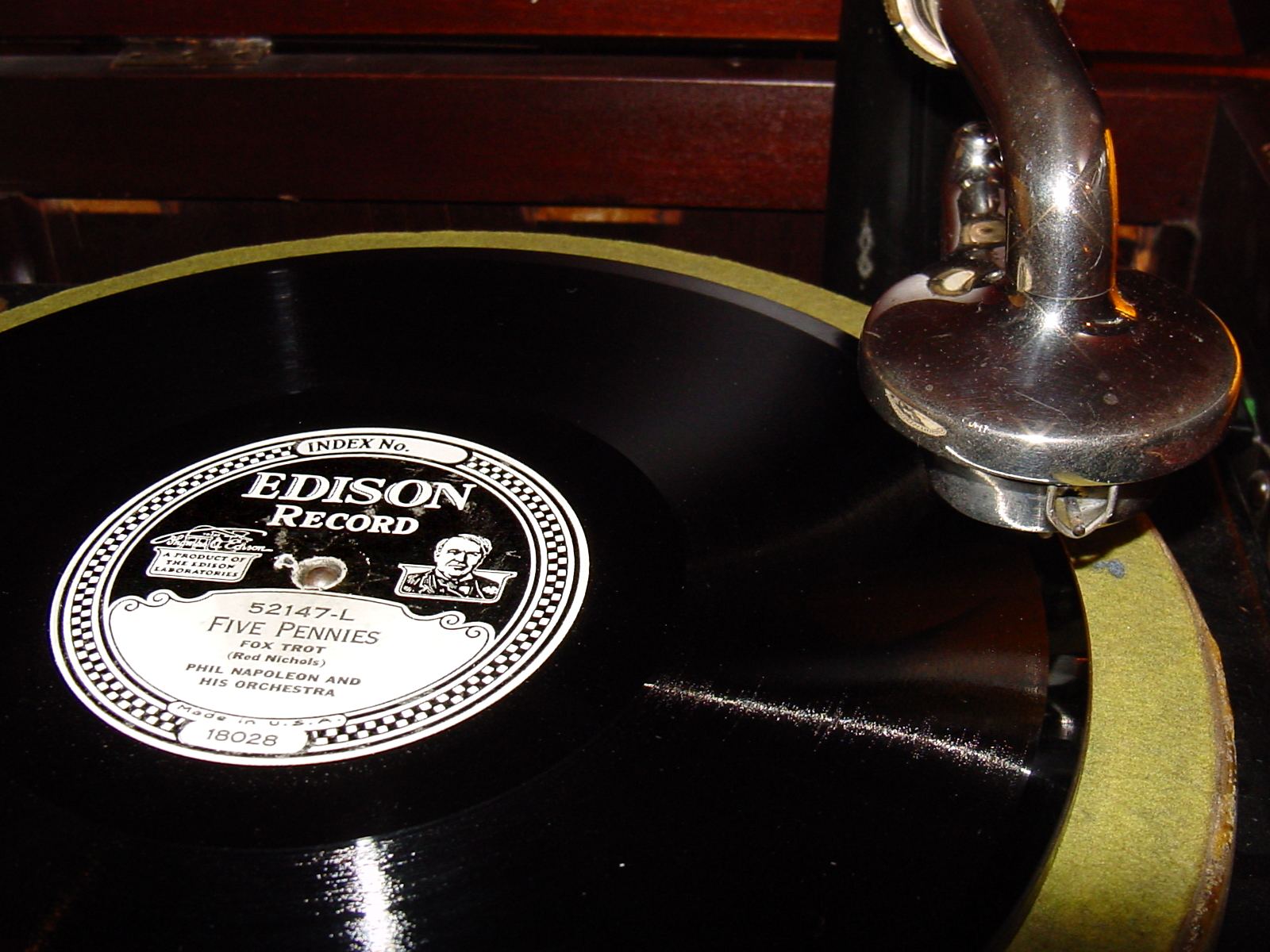
Sound in the mid-1800s was depressing. You had great music by composers such as Mendelssohn and Debussy and great orchestras to play them, but no way to save the sound. Once the moment past, the ephemeral noise was gone forever.

In 1878, Thomas Alva Edison changed the world of sound by creating the first device to record sound and play it back - the phonograph. For the first time in history, sound could be captured and kept for the future. 


Edison developed the phonograph while working on the telegraph and telephone. The device worked as a voice's vibrations caused a needle to indent a pattern. He first had the machine engraving on a tinfoil-covered cylinder. Later, the design utilized a more durable wax material. This design, shown above, still had the music on the outside of a cylinder, a arrangement foreign to us.


The well-known record disc came about in the early 1900s, when competitors created larger capacity discs rivaling Edison's cylinders. Despite his stubbornness, Edison finally conceded and began his own production of the disc phonographs.

Works Cited:
"History of the Cylinder Phonograph." The Library of Congress. N.p., n.d. Web. 09 Feb. 2016.
Staff, History.com. "Thomas Alva Edison Patents the Phonograph." History.com. A&E Television Networks, 2009. Web. 09 Feb. 2016.

Sound as a weapon?!

Loud noises hurt. I experienced this fact firsthand a couple mornings ago when my band director accidentally blasted Chameleon performed by Maynard Ferguson (https://www.youtube.com/watch?v=3Ipns0jneLY) on the band hall speakers. Beyond 120 decibels, humans start to experience discomfort and hearing loss starts at 130 decibels. 


This LRAD (Long Range Acoustic Device) is capable of delivering sound as loud as 155 dB, well beyond safe levels. It has been used to disperse protesters in Pittsburgh during the G-20 Summit in 2009 as well as the Ferguson, Missouri protesters.


The manufacturers of this weapon label it as "non-lethal", but its potential to literally blow out your eardrums, interfere with balance, and cause permanent damage must be regulated. Right now, no clear standards are in play for this acoustic arsenal, which is also entirely subject to the operator, for whom proper training is necessary.


Works Cited:
Baldwin, Roberto. "What Is the LRAD Sound Cannon?" Gizmodo. N.p., 08 Aug. 2014. Web. 09 Feb. 2016.
Pasternack, Alex. "The New Sound of Crowd Control." Motherboard. N.p., 17 Dec. 2014. Web. 09 Feb. 2016.

Radio (Unbroken link)

Our class has just finished Unbroken by Laura Hillenbrand. What a book! The author's thorough and vast research, as well as Louis Zamperini's extraordinary life, allowed her biographical novel to read as a fiction novel. A noteworthy scene in the narration involves a radio broadcast, Postman Calls, that alerts Louis' family to his survival. Today I will synthesize technology with my ISP topic and explore how the magic box of a radio transmits and receives signals between continents. 


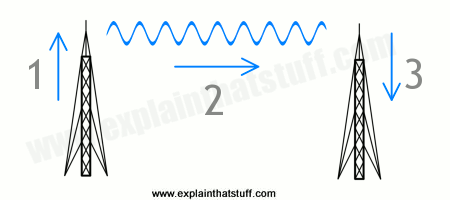
The radio developed in the late 1800's and increased in popularity soon after. Its wireless capabilities captivated the populace and is based on the use of electromagnetic energy, more specifically the radio wave. A wave always has two characteristics: frequency and amplitude. These two are essential to the system of radio stations.

A transmitter sends out the wireless signal which travels until it is picked up by the receiver. Both sides use an antenna to do this.

How do simple waves transmit beautiful voices and powerful messages? Radio stations use either amplitude modulation or frequency modulation to encode their content. 


Amplitude modulation occurs when you overlay the information by manipulating the amplitude (height) of your output wave. High points in your information wave would correspond with areas of large amplitude.

Frequency modulation is slightly more complex but much more ubiquitous. High points in the information wave correspond with areas of large amplitude. These occur when the output wave seems "squished together".

Learning and researching about how radios work has been a real joy because I had no idea how such a common object worked. I am now seriously considering build a personal radio transmitter... 


Works Cited:
Brain, Marshall. "How Radio Works." HowStuffWorks. N.p., 07 Dec. 2000. Web. 08 Feb. 2016.
Woodford, Chris. "Radio." Explain That Stuff! N.p., 5 Sept. 2015. Web. 08 Feb. 2016.